Willa Russell · 7 October 2026
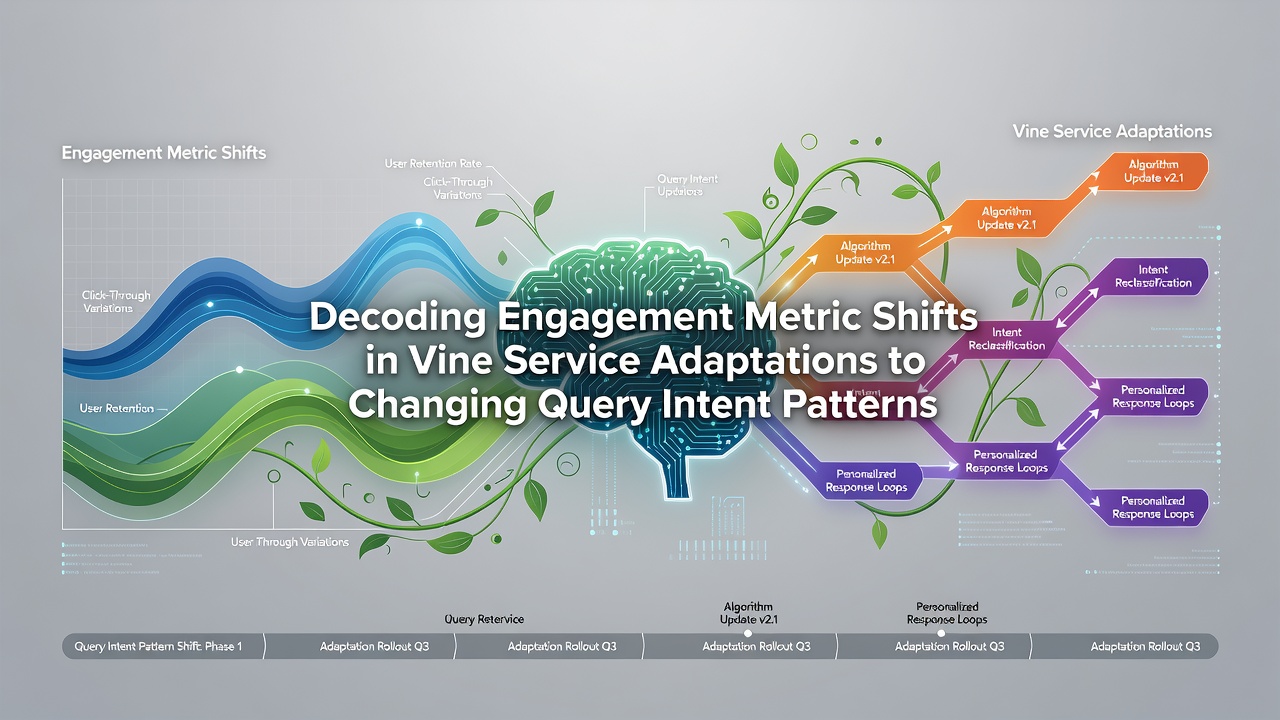
Decoding Engagement Metric Shifts in Vine Service Adaptations to Changing Query Intent Patterns
Platform operators managing Vine services have tracked substantial changes in engagement metrics throughout 2026 as query intent patterns continue to evolve, and researchers examining these developments report that services now adjust content delivery mechanisms more rapidly than in previous years. Data collected from multiple regional analytics providers indicates that user queries have shifted toward more specific, context-driven searches, which in turn prompts Vine services to refine recommendation algorithms and metadata handling processes.
Tracking Query Intent Evolution
Query intent patterns refer to the underlying goals users express through search terms, and observers monitoring digital behavior note that these patterns have grown increasingly layered since the start of the decade. Studies conducted by academic teams at institutions across North America and Europe show that informational queries now often include temporal or situational modifiers, while navigational queries frequently incorporate platform-specific references. Vine services respond to these developments by updating indexing protocols and intent classification models, which alters how content surfaces in user feeds and discovery sections.
Figures released in October 2026 from industry monitoring groups reveal that the proportion of queries classified as commercial investigation has risen in several markets, and this change forces services to recalibrate engagement signals such as dwell time, completion rates, and interaction sequences. Those analyzing the data find that services incorporating real-time intent detection tools record different metric distributions compared with those relying on static classification systems.
Service Adaptations and Metric Responses
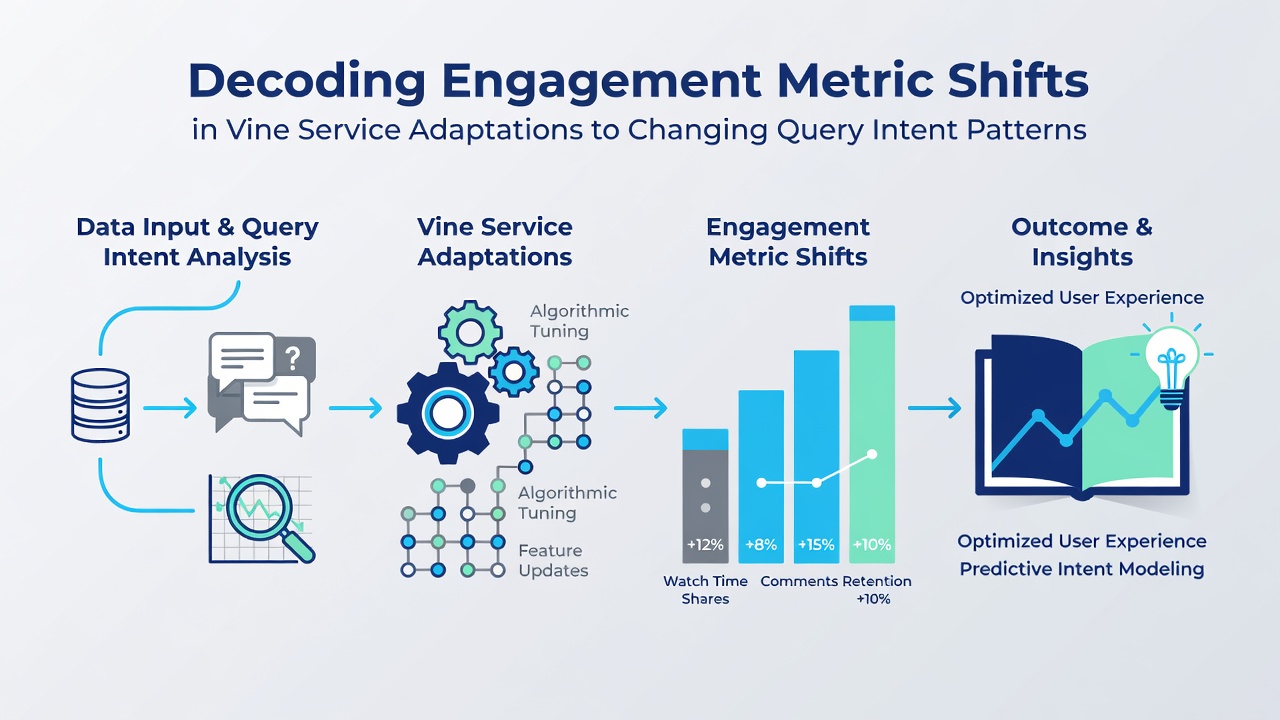
Vine service providers implement several technical adjustments when query intent shifts become apparent, and these modifications include enhanced natural language processing layers along with revised ranking factors that prioritize content freshness and contextual relevance. Research indicates that platforms adopting these adaptations experience measurable changes in average session duration and content recirculation rates, whereas services maintaining older indexing methods show slower responses to emerging query clusters.
According to reports compiled by organizations focused on digital infrastructure, the integration of adaptive metadata tagging has produced distinct engagement outcomes across different content categories. Video assets that align closely with emerging query clusters demonstrate higher retention figures, while assets optimized for older intent patterns record declines in secondary interactions such as shares and saves. Observers note that these patterns appear consistently across datasets gathered from both mobile and desktop environments.
Regional Data Patterns
Analysis of engagement data collected from multiple geographic zones shows that adaptation speed correlates with metric stability in several instances, and services operating in markets with higher query volatility implement more frequent model updates. A study published by researchers at an Australian university examined longitudinal trends and found that platforms adjusting to localized intent variations maintained steadier interaction curves over quarterly periods compared with those applying uniform global models.
Canadian statistical agencies tracking digital platform usage have documented parallel developments, noting that engagement metric volatility decreases when services incorporate region-specific query signals into their core algorithms. These findings align with observations from European research consortia that examined similar adaptation cycles across multilingual user bases, where intent classification accuracy improved following targeted model retraining.
Implications for Content Distribution
Content creators and distribution teams working within Vine ecosystems encounter new requirements as engagement metrics respond to intent-driven adaptations, and distribution strategies now emphasize alignment between content metadata and detected query clusters. Data from platform dashboards indicates that content published after recent algorithm updates receives different initial distribution weights, which subsequently affects cumulative engagement totals.
Those examining performance reports find that metrics tied to early-stage interactions, such as click-through rates from search results, show stronger sensitivity to intent classification changes than metrics measured later in the user journey. Vine services continue to refine feedback loops that connect query logs directly to content ranking decisions, producing ongoing adjustments in how engagement is recorded and weighted across the platform.
Conclusion
Engagement metric shifts observed in Vine services during 2026 reflect broader changes in query intent patterns, and the adaptations implemented by service operators continue to influence how these metrics are calculated and interpreted. Regional studies and platform data confirm that classification accuracy and update frequency remain central factors in determining metric stability across different user segments and content types.